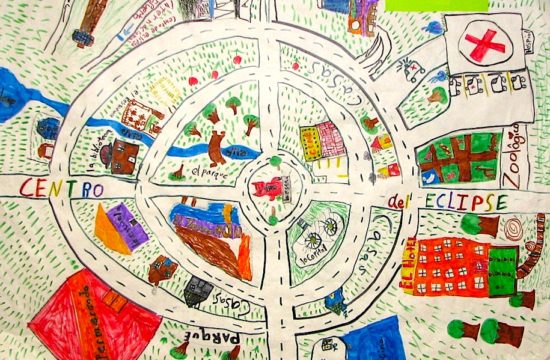
Students at FSMN develop their understanding and use of Spanish through multiple learning styles. They learn through music, dance, children’s literature, art, videos, theater, and games. These activities provide them with the means to develop their vocabulary, understanding and pronunciation in the target language.
The Total Physical Response (TPR) approach is a regular component of instruction in Spanish class. Movement games, responding to oral directions with actions, and drawing objects are examples of TPR activities. Students are encouraged to speak as they do the actions. The instructor regularly employs a multi-sensory approach to enhance each individual’s learning.
The main tools used to teach Spanish in kindergarten through grade four are thematic units supported by videos, music, games, books and projects. The main sources used to teach Spanish for middle school grades are anchored in a text series (currently ¡Avancemos!1a, 1b and ¡Avancemos! 2).
As students enter middle school, the four skills of listening, speaking, reading and writing are developed more equally (contrasting with lower school, in which listening and speaking are emphasized). Paired work is used to increase the number of minutes during class meetings in which the students are speaking in the target language. The percentage of the target language used in class is maximized as the students get into grades seven and eight.
In class, we celebrate multiple cultural events such as holidays and community events. Some examples include Mexican Independence Day and The Day of the Dead. Students observe, read about, or experience arts and artifacts of the culture, such as food, dress, toys, houses, songs, artwork, crafts and architecture.